Biosignal foundation models

NeuroRVQ

NeuroRVQ turns raw biosignals into compact tokens without losing the fine-grained detail other tokenizers throw away. The result: small, efficient foundation models that match or beat larger models.

#1

on a five-task EEG benchmark, 4+ points ahead of the next-best model

NeurIPS 2026 paper

Top 3 of 55

models on the independent EEG-Arena leaderboard

Top-5 metric

EEG-Arena paper and leaderboard

70x
smaller

than the largest ranked model on EEG-Arena

A foundation model is only as good as its tokens

Before any AI model can learn from biosignals, those signals have to be turned into tokens: the discrete vocabulary the model reads, the way an LLM reads words.

Biosignals make this hard. A single EEG recording mixes slow rhythms that unfold over seconds with fast bursts lasting milliseconds. Muscle and heart signals carry sharp, high-frequency features that matter clinically. Most existing tokenizers smooth these details away, so the model never sees them and no amount of extra scale gets them back.

NeuroRVQ was built to fix the tokenizer first.
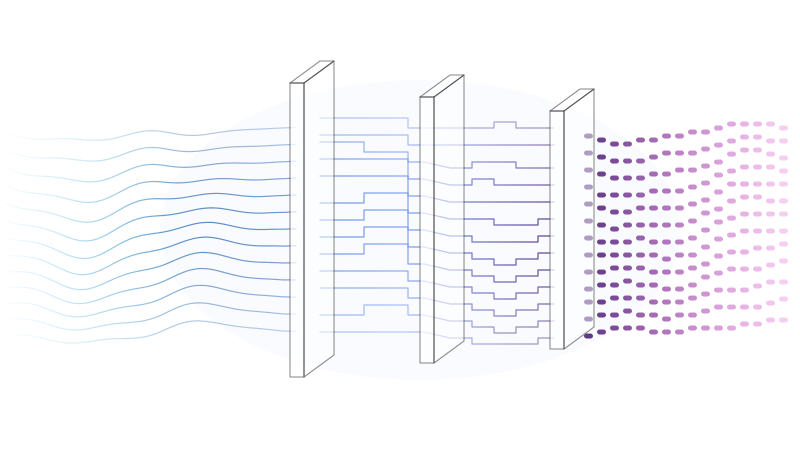
Brainwave lines become more discrete as they pass through three glass layers

How it works

NeuroRVQ is a family of modality-adaptive tokenizers. Three design choices let it capture the full frequency spectrum of a biosignal.

01

It listens at every timescale

A multi-scale encoder splits each signal into frequency bands before encoding, much as a neuroscientist would separate slow rhythms from fast ones. Each band gets its own representation.

02

It encodes detail layer by layer

Each band is compressed with residual vector quantization (RVQ): a first token captures the broad shape and each further token encodes what the previous ones missed. Rich signals stay compact and nothing important is lost.

03

It respects the physics of the signal

The training objective is grounded in how biosignals actually behave, measuring both amplitude and phase in the frequency domain. Phase is circular, so a model trained as if it were not gets timing wrong. NeuroRVQ's phase-aware loss gets it right and it is the single biggest driver of reconstruction quality.

Clinical feasibility study

From benchmark to clinic

NeuroRVQ powers CogiSense and CogiMotion, Cogitat's EEG-based rehabilitation technology.

In a clinical feasibility study with The MiNT Academy at Hobbs Rehabilitation, five stroke patients used CogiMotion alongside a Tyromotion Amadeo robotic hand device. Our EEG foundation model decoded their brain activity in real time, turning each attempt to move into live, interactive feedback.

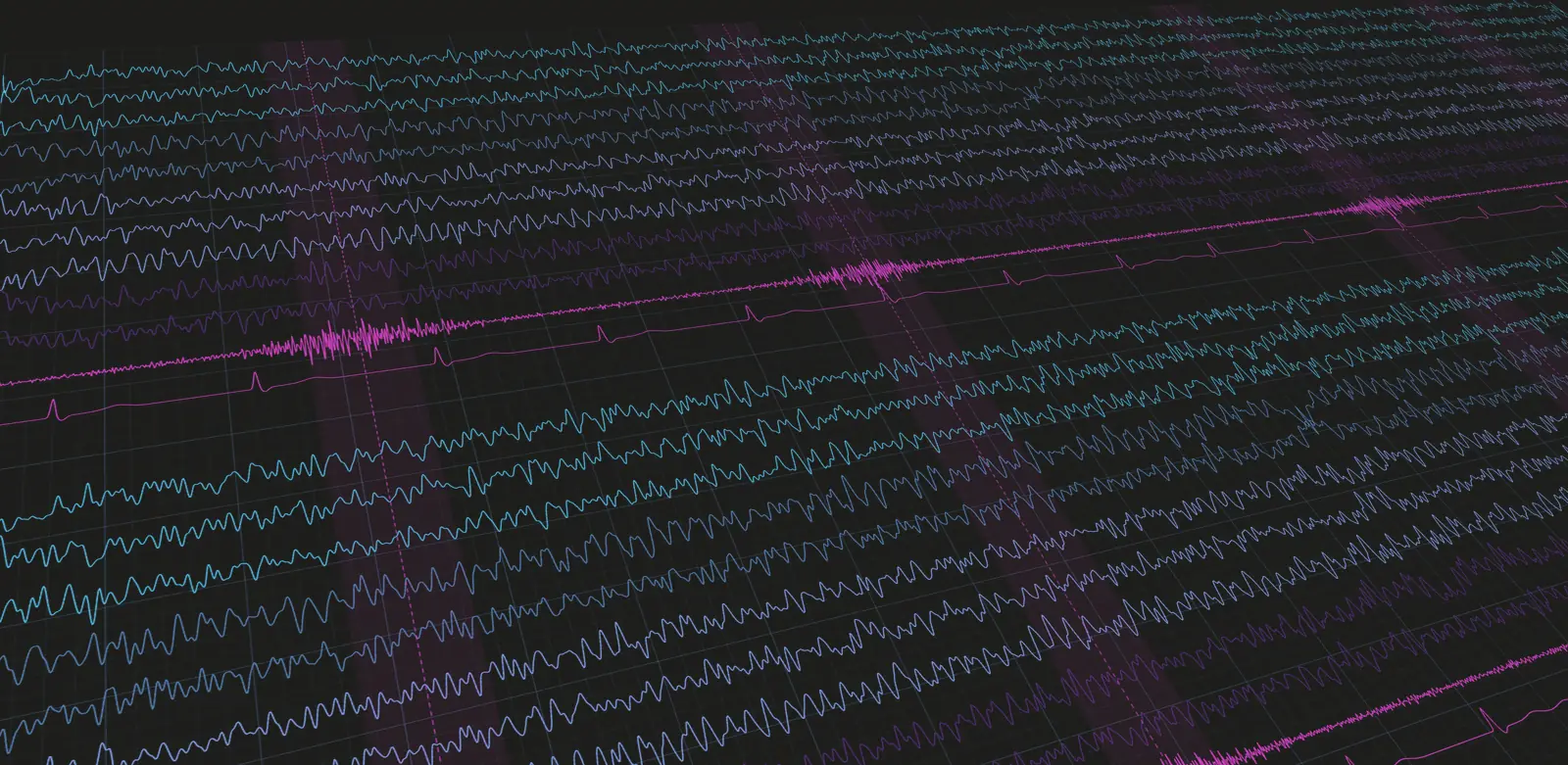
Multi-channel EEG recording on a clinical chart, with each attempt to move highlighted Real-time decoding
Participants5 stroke patients
SettingThe MiNT Academy at Hobbs Rehabilitation
DeviceCogiMotion with a Tyromotion Amadeo robotic hand

What the study found

High comfort and satisfaction

High comfort and overall satisfaction reported by participants.

No serious adverse events

No serious adverse events were recorded during the study.

A new window for therapists

Clinicians highlighted the ability to monitor motor intent as a valuable new source of clinical insight.